Why Breast Pumping Matters
Breastfeeding is widely recognised as one of the most beneficial things you can do for your baby's early health. The World Health Organization recommends exclusive breastfeeding for the first six months of life, followed by continued breastfeeding alongside solid foods up to two years and beyond. However, direct breastfeeding isn't always possible — and that's exactly where pumping comes in.
Breast pumping allows your baby to receive all the nutritional and immunological benefits of breast milk even when you can't be physically present to nurse. Whether you're heading back to work, dealing with latch difficulties, recovering from a caesarean section, or caring for a premature baby in the NICU, a breast pump can bridge the gap between your body's ability to produce milk and your baby's need to receive it.
Pumping also gives partners and other caregivers the opportunity to feed the baby, which supports bonding and allows the primary breastfeeding parent to rest. For many families, a combination of direct nursing and pumping is the key to sustaining breastfeeding long-term — well beyond the point where it might otherwise have stopped.
Understanding the mechanics of pumping, following an evidence-based schedule, and knowing how to respond to your body's cues are all crucial skills. This guide is designed to give you that knowledge from day one.
Understanding How Your Milk Supply Works
Before diving into the practical side of pumping, it's worth understanding the physiology behind milk production. Your body operates on a simple supply-and-demand principle: the more milk that is removed from the breast — whether by a baby or a pump — the more milk your body will produce. Conversely, if milk is not removed regularly, your body interprets this as a signal to slow or stop production.
Two key hormones drive milk production and let-down. Prolactin, produced by the pituitary gland, is responsible for stimulating milk synthesis. Its levels spike after each feed or pumping session, signalling your body to replenish what was just removed. Oxytocin — often called the 'love hormone' — triggers the let-down reflex, causing the small muscles around the milk ducts to contract and push milk towards the nipple.
Let-down is a pivotal moment in any pumping session. Some people feel it as a tingling or pins-and-needles sensation; others feel a subtle fullness release; some feel nothing at all. Stress, pain, or distraction can inhibit let-down, which is why creating a calm, comfortable environment for pumping is so important — and not just a luxury.
It typically takes between two and six weeks postpartum for your milk supply to become fully established. During this window, your body is calibrating production to your baby's needs, so consistency is everything. Missing sessions or going too long between removals during this critical period can have a long-lasting impact on your overall supply.
It's also worth knowing that the composition of breast milk changes throughout a single feeding or pumping session. The milk at the start — known as foremilk — is thinner and higher in water content, perfect for quenching thirst. The milk that comes towards the end — hindmilk — is richer in fat and calories. Ensuring you empty the breast as fully as possible at each session means your baby benefits from both.
- Prolactin spikes after milk removal — signalling your body to produce more
- Oxytocin triggers let-down and is inhibited by stress
- Supply is established in the first 2–6 weeks postpartum
- Consistent, frequent removal is the single most effective way to build supply
- Emptying the breast fully ensures baby gets calorie-rich hindmilk
Ready to simplify your pumping schedule?
Track sessions and your freezer stash with Stash on iOS.
Choosing the Right Breast Pump
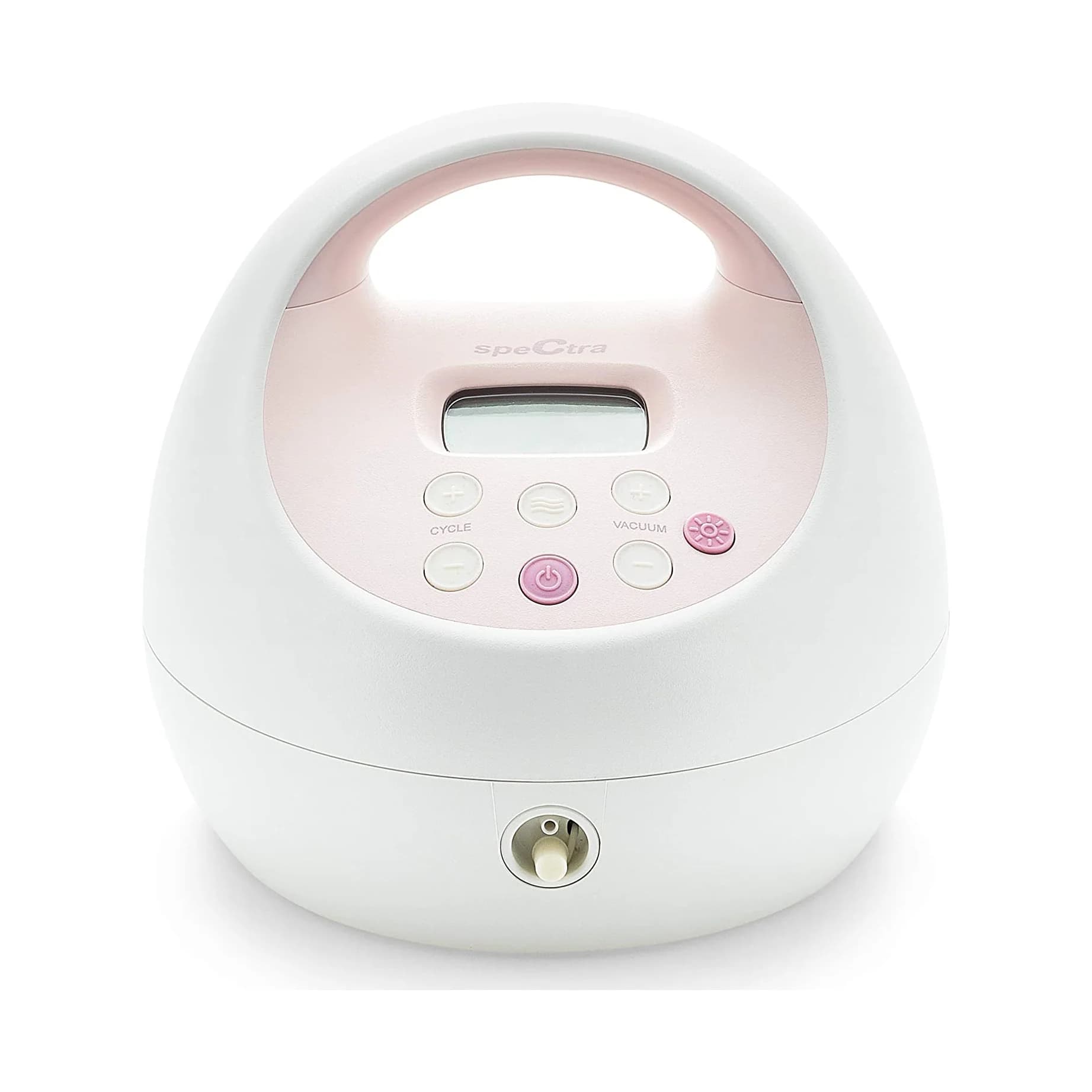
Not all breast pumps are created equal, and the right choice depends on how often you plan to pump, your budget, and your lifestyle. The market broadly divides into three categories: manual pumps, electric single pumps, and electric double pumps — with wearable (hands-free) pumps emerging as a fourth, rapidly growing category.
Manual pumps are operated by hand and are quiet, lightweight, and inexpensive. They're a solid choice for occasional pumping — for example, if you're mostly nursing but want to collect milk during letdown on the opposite side. However, they are not practical for exclusive pumping or regular daily sessions, as they require significant physical effort and are slower than electric alternatives.
Single electric pumps express milk from one breast at a time. They're more efficient than manual pumps and suitable for moderate pumping — perhaps once or twice a day. Double electric pumps express from both breasts simultaneously, which cuts session time roughly in half and has been shown in research to produce more milk per session compared to single pumping. If you're returning to work or pumping multiple times per day, a double electric pump is generally the gold standard.
Hospital-grade pumps — available to hire rather than buy — are the most powerful option and are typically recommended for parents of premature babies or those working to establish supply from scratch. They use a technology called 'closed system' pumping, meaning the internal motor is protected from milk, making them safe to share.
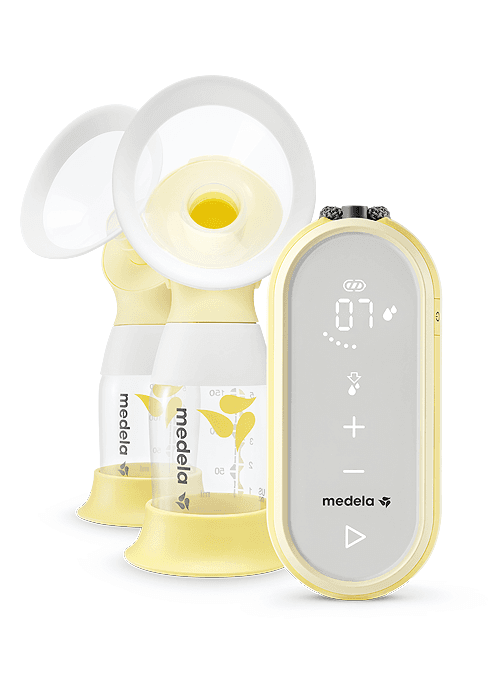
Wearable, hands-free pumps have transformed the experience of pumping for many parents. These compact devices sit inside a nursing bra, allowing you to pump discreetly while going about your day — working at a desk, walking around the house, or even driving. Their motor power is generally lower than traditional double electrics, but for many people the convenience more than compensates. Many parents use wearable pumps for daytime sessions and a traditional pump for early-morning or evening sessions when maximum output matters.
When selecting a pump, pay close attention to flange size. The flange is the funnel-shaped cup that fits over your nipple and areola. Using the wrong size is one of the most common reasons for low output and nipple pain. Most pumps come with a standard 24mm flange, but nipple sizes vary significantly. Many lactation consultants recommend measuring your nipple diameter (not the areola) and choosing a flange that is 2–3mm larger. Our dedicated flange size guide walks through measurement and fit symptoms in detail.
- Manual pumps — best for occasional use; quiet and portable but effortful
- Single electric — good for 1–2 sessions per day
- Double electric — recommended for regular or exclusive pumpers; halves session time
- Hospital-grade — most powerful; ideal for premature babies or building supply
- Wearable/hands-free — convenient for pumping on the go; lower power than traditional electrics
- Flange sizing is critical — measure your nipple and choose a flange 2–3mm larger
When to Start Pumping
The right time to start pumping depends on your individual circumstances. If you're planning to exclusively pump from birth — either by choice or medical necessity — you'll want to begin within the first few hours after delivery, ideally within six hours of birth. Early, frequent stimulation in those first days is critical for signalling your body to produce a full milk supply.
If you're primarily breastfeeding and want to introduce pumping, most lactation consultants suggest waiting until breastfeeding is well established — usually around four to six weeks postpartum. Introducing a pump too early can sometimes cause confusion for a newborn who is still learning to latch, and it may lead to oversupply, which brings its own challenges including engorgement and blocked ducts.
If you're returning to work, aim to start pumping about two to three weeks before your return date. This gives you time to get comfortable with your pump, build up a freezer stash, and adjust your schedule without the added pressure of a work deadline looming.
Parents of premature or NICU babies often need to begin pumping immediately after birth, as their baby may not be able to nurse directly. In this situation, hospital-grade pump hire is usually recommended, and staff at the NICU should be able to provide specialist support.
For those pumping after a period of reduced nursing — for example, following illness or a growth spurt — it's never too late to pump to help rebuild supply. The body responds to demand at any stage, though it may take more sessions and more time to see results.
How to Create an Effective Pumping Schedule
For situation-specific breast pumping schedules — exclusive pumping, combo feeding, working moms, power pumping, and weaning — start with our breast pumping schedule guide, which links to detailed plans and a free personalized builder.
Consistency is the cornerstone of a successful pumping routine. Your body thrives on predictability — pumping at the same times each day helps regulate hormone release and maintains steady production. Think of each scheduled session as a non-negotiable appointment with your supply.
For exclusively pumping parents in the newborn stage, eight to twelve pumping sessions per 24 hours is typically recommended — roughly mimicking the feeding frequency of a breastfed newborn. This equates to pumping every two to three hours during the day, with at least one session overnight. While the overnight session feels brutal when you're sleep-deprived, prolactin levels are naturally higher at night, making night pumping particularly effective for supply.
As your baby grows and your supply becomes well established — usually around three to four months — many exclusively pumping parents begin to gradually drop sessions, moving towards six to eight per day. Dropping sessions should always be done slowly (no more than one session per week) to give your body time to adjust without causing engorgement or blocked ducts.
For parents who are combination feeding (nursing and pumping), the schedule looks different. A common approach is to pump once or twice a day to build a stash — often first thing in the morning when supply is naturally highest, or immediately after a nursing session to catch any remaining milk. This 'top-up' approach is sustainable and doesn't interfere with direct breastfeeding.
If you're pumping at work, aim for sessions that mirror how often your baby feeds. Most employed parents pump two to three times during an eight-hour workday, typically every three hours. Planning sessions around natural breaks — morning break, lunch, and afternoon break — makes it easier to integrate pumping into a working day. Knowing your rights matters here: in the UK, for example, employers have a legal duty to provide suitable rest facilities for nursing mothers.
One of the most effective tools for maintaining a pumping schedule is a dedicated tracking app. Logging each session, recording the time, duration, and volume pumped, and monitoring trends over days and weeks gives you actionable data. You can spot patterns — perhaps your output dips on certain days or spikes after a particularly good sleep — and make informed adjustments. An app also removes the mental load of trying to remember when you last pumped, which is a genuine challenge in the fog of new parenthood.
Night sessions feel brutal, but prolactin levels are naturally higher overnight — making them one of the most supply-effective sessions of the day. Even one overnight session can make a meaningful difference.
Build a schedule tailored to you
Our free pumping schedule builder creates a personalized 24-hour plan based on your baby's age, feeding situation, and work routine.
Use the pumping schedule builder- Newborn stage (exclusive pumping): 8–12 sessions per 24 hours, every 2–3 hours
- Overnight sessions: uncomfortable but prolactin is higher at night — try not to skip
- Drop sessions gradually (one per week) to avoid engorgement
- Combination feeders: 1–2 sessions per day, ideally morning or post-nursing
- Working parents: aim for 2–3 sessions in an 8-hour workday, every 3 hours
- Use a pumping tracker app to log sessions, volumes, and trends automatically
Step-by-Step: How to Pump Effectively
Getting the most out of each pumping session is both a science and a skill that improves with practice. Here's a step-by-step walkthrough to help you optimise every session from the very beginning.
First, prepare your environment. Choose a comfortable, private space where you can relax. Stress is the enemy of let-down, so minimise distractions where possible. Many parents find it helpful to have a photo or video of their baby, a muslin cloth with their baby's scent, or a recording of their baby's sounds nearby — all of these can stimulate oxytocin release and support let-down. Have a large glass of water within reach; staying hydrated is essential for milk production.
Before attaching the pump, wash your hands thoroughly. Perform a breast massage for one to two minutes — using your fingertips to apply gentle circular pressure from the outer breast towards the nipple, then lightly shake the breast. Breast massage before and during pumping has been shown in studies to significantly increase the fat content and overall volume of milk expressed.
Centre your nipple in the flange and switch the pump on. Most electric pumps have two phases: a fast stimulation phase that mimics a baby's initial rapid sucking to trigger let-down, followed by a slower expression phase. Allow the stimulation phase to run for about two minutes or until you see milk begin to flow, then switch to expression mode.
Aim for sessions of around 15–20 minutes per breast when double pumping, or 10–15 minutes per side if single pumping. Pumping beyond the point at which milk flow has slowed to a drip is generally not productive and can cause nipple soreness. Towards the end of the session, perform additional breast massage or hand compression — this technique, known as 'hands-on pumping', can increase output by up to 48% according to research from Stanford University.
After finishing, hand-express for a further minute or two if possible. This encourages full emptying and sends a stronger supply signal to your body. Seal and label your milk containers immediately, noting the date and volume. Rinse or wash pump parts according to the manufacturer's guidance and your own hygiene preferences. For a full walkthrough of letdown, hands-on pumping, and posture, see our breast pumping technique guide and hand expression tutorial.
- Create a calm environment — photos, scent cloths, and baby sounds trigger oxytocin
- Massage breasts for 1–2 minutes before starting
- Allow stimulation phase to trigger let-down before switching to expression mode
- Pump for 15–20 minutes; stop when flow slows to a drip
- Use hands-on pumping (breast compression during session) to increase fat content and volume
- Hand-express briefly after the session to fully empty the breast
- Label all milk with date and volume immediately
How to Maximise Milk Output
If you feel your output isn't where you'd like it to be, there are several evidence-informed strategies that can help. The most important thing to remember is that pump output is not a direct measure of your milk supply — many parents nurse and pump plentifully but see modest amounts in the collection bottles. Babies are far more efficient at extracting milk than any pump.
Power pumping is one of the most effective techniques for boosting supply. It involves mimicking a baby's cluster feeding pattern by pumping in a specific pattern: pump for 20 minutes, rest for 10, pump for 10, rest for 10, pump for 10 — all within a one-hour window. Done once a day for three to seven consecutive days, power pumping sends a strong supply signal to the body. It's tiring, so choosing a time when you have support is wise.
Hydration and nutrition play a direct role in milk production. Most lactation experts recommend drinking to thirst — which for breastfeeding parents typically means 2–3 litres of water per day. Oatmeal, brewer's yeast, flaxseed, and certain herbal teas (such as fenugreek and blessed thistle) are commonly cited galactagogues — substances believed to support milk supply. The evidence base for these varies, and it's always worth discussing supplements with a healthcare provider before trying them.
Sleep and rest, while sometimes impossible with a newborn, have a measurable impact on prolactin levels. Studies have shown that sleep deprivation can suppress prolactin production. Where possible, try to sleep when the baby sleeps and accept help with overnight feeding from a partner or support person so you can get longer stretches.
Skin-to-skin contact — even a brief cuddle with your baby before or during a pumping session — is one of the most effective and underused ways to trigger oxytocin and improve output. If you're at work and pumping away from your baby, warm the pump flanges slightly (never hot), do a gentle breast massage, and use your baby's photo or scent cloth to help.
Avoiding formula supplementation during supply-building phases (unless medically recommended) preserves the demand signal. Every bottle of formula given is a missed signal to the breast. If supplementation is needed, consider asking your healthcare team about supplementing at the breast using a supplemental nursing system, or returning to pumping immediately after giving a bottle.
Power pumping protocol: pump 20 min → rest 10 min → pump 10 min → rest 10 min → pump 10 min — all within one hour. Repeat once daily for 3–7 days to send a strong supply signal.
- Power pumping (20/10/10/10/10 pattern in one hour) done daily for 3–7 days boosts supply
- Stay well hydrated — aim for 2–3 litres of water daily
- Oats, brewer's yeast, and flaxseed may support supply — discuss with a lactation consultant
- Protect sleep where possible — prolactin is suppressed by severe sleep deprivation
- Skin-to-skin before pumping triggers oxytocin and improves let-down
- Warm flanges slightly before use to encourage let-down
- Avoid unnecessary formula supplementation during supply-building phases
Breast Milk Storage: Rules, Timelines, and Best Practices
Correctly storing expressed breast milk is essential for preserving its nutritional and immunological properties and keeping your baby safe. The good news is that breast milk is remarkably robust — it contains its own antibacterial properties that help it stay fresh longer than formula.
Our dedicated breast milk storage rules guide covers CDC timelines, combining sessions, bags vs bottles, and thaw rules in one place. The storage & travel hub links plane, car, and on-the-go logistics when you are away from home.
The widely followed '4-4-4' guideline (though guidelines vary slightly by source) gives a useful starting framework: freshly expressed milk can be kept at room temperature (up to 25°C / 77°F) for up to four hours; in the fridge (4°C / 39°F or below) for up to four days; and in the freezer (−18°C / 0°F or below) for up to four months in a standard freezer compartment, or up to six to twelve months in a dedicated deep freezer. Some guidelines extend refrigerator storage to up to five or six days under ideal conditions, but four days is the conservative and widely recommended benchmark.
Always store breast milk in sterilised, food-grade containers — either BPA-free hard plastic bottles or purpose-made breast milk storage bags. Avoid storing in regular household bags or containers, which may leach chemicals. Fill containers to about three-quarters capacity, as milk expands when frozen. Lay bags flat in the freezer to freeze quickly and to make stacking easier, saving significant freezer space.
Label every container with the date of expression and the volume. When using frozen milk, always use the oldest milk first (first in, first out). Thaw frozen milk in the fridge overnight or under warm running water — never in a microwave, which creates dangerous hot spots and destroys some of milk's beneficial components. Once thawed, use within 24 hours and do not refreeze.
If you're combining milk from multiple pumping sessions, cool newly expressed milk in the fridge before adding it to an already-chilled container. Never add warm milk directly to previously refrigerated or frozen milk, as this raises the temperature of the stored milk and shortens its safe storage window.
Transporting milk from work or elsewhere requires an insulated cool bag with ice packs. Milk transported this way should be treated as refrigerated and used within the remaining time of its refrigerator storage window.
The 4-4-4 Rule — room temperature (≤25°C): 4 hours · fridge (≤4°C): 4 days · standard freezer: 4 months · deep freezer (−18°C): up to 12 months. Never refreeze thawed milk.
- Room temperature (≤25°C): up to 4 hours
- Refrigerator (≤4°C): up to 4 days
- Standard freezer compartment: up to 4 months
- Deep freezer (−18°C): up to 6–12 months
- Use sterilised, BPA-free containers or dedicated storage bags
- Fill to ¾ capacity — milk expands when frozen
- Label with date and volume; use oldest milk first
- Never microwave breast milk; thaw in fridge or under warm running water
- Use thawed milk within 24 hours; do not refreeze
- Cool new milk before combining with stored milk
Pumping at Work: A Practical Playbook
Returning to work while continuing to breastfeed or exclusively pump is one of the biggest logistical challenges new parents face. But with good preparation and a clear plan, it's entirely achievable — and millions of working parents do it every year.
Know your rights before day one. In the US, the PUMP Act requires most employers to provide reasonable break time and a private, non-bathroom space to express milk for one year after birth — with stronger rules in many states. In the UK, employers must carry out a risk assessment for new and expectant mothers under the Management of Health and Safety at Work Regulations 1999 and provide a suitable rest area for nursing mothers that is private and has access to facilities to store milk safely — not a toilet cubicle. Our breast pumping at work rights guide covers US federal and state law, UK legal layers, lactation room checklists, and escalation steps if HR pushes back.
Prepare your work pump setup. You'll want a bag that fits your pump, flanges, bottles, storage bags, a small cooler with ice packs, and a hands-free pumping bra. Many parents keep a complete set of pump parts at work and a separate set at home to reduce the amount of kit carried back and forth. A hands-free pumping bra allows you to work on a laptop or eat lunch during sessions, making pumping far more compatible with a busy schedule.
Plan your pumping breaks around your meetings and workload. Block them out in your calendar as recurring appointments, and treat them as immovable — just as you would a meeting. Communicating your needs to your manager and close colleagues (to whatever degree you're comfortable) reduces the awkwardness of disappearing for 20-minute periods.
Handling milk at work requires care. Use a clearly labelled sealed container and keep it in a dedicated area of the shared fridge, or bring your own small cool bag. At the end of the day, transport milk home in your cooler and refrigerate or freeze it promptly.
Many parents find the first week back at work the most difficult — output often dips with the stress of the transition, and it can feel alarming. This usually resolves within a week or two as your body adjusts to the new routine. Tracking your sessions with an app during this period is particularly helpful, as it lets you see trends and reassures you that your body is adapting rather than failing.
Pumping for Premature or NICU Babies
If your baby has arrived prematurely or requires neonatal intensive care, pumping takes on a different emotional and clinical significance. Breast milk is not just nutrition for premature babies — it is medicine. Preterm breast milk is uniquely tailored to the needs of a premature infant, containing higher levels of protein, fat, and immunological factors than milk produced for a full-term baby.
Begin pumping as soon as possible after birth — ideally within one to six hours, and definitely within the first 24 hours. Early stimulation is critical for establishing supply when your baby cannot yet nurse directly. Use a hospital-grade electric pump if at all possible; these are available to hire and your NICU team should be able to advise you on access.
In the first days, you will likely express colostrum — the thick, golden 'first milk' that is incredibly concentrated and packed with antibodies. Volumes will be small (often only a few millilitres), but this is normal and these tiny amounts are precious. Use syringes rather than bottles to collect and store colostrum at this stage. If you are still pregnant and considering collecting colostrum before birth, see our colostrum harvesting before birth guide — with provider approval only.
Aim to pump eight to twelve times per 24 hours, including at least once overnight. Skin-to-skin care (kangaroo care) with your baby, even while they are in the incubator, has been shown to dramatically improve milk supply and let-down in NICU parents. Even a few minutes of skin-to-skin can have a measurable impact on oxytocin and prolactin levels.
The emotional toll of pumping for a NICU baby is significant. You may be dealing with fear, exhaustion, trauma, and the pressure of knowing your milk is vital medicine for your fragile baby. Be compassionate with yourself. Speak to NICU nurses, lactation consultants, and peer support groups who understand the unique challenges of this experience. Every drop counts, and every session is an act of love.
Skin-to-skin (kangaroo care) — even just a few minutes — has been shown to measurably boost oxytocin and prolactin levels in NICU parents. Ask your nurse about doing this during pumping sessions.
Common Pumping Problems and How to Solve Them
Even the most experienced pumping parents run into difficulties. Here are the most common issues and evidence-based strategies to address them.
Low output is the number one concern. Before troubleshooting, check your flange size — ill-fitting flanges are the leading mechanical cause of low output. If your nipple rubs the tunnel walls or the areola is being drawn deeply into the flange, output will suffer and pain will follow. Next, review your schedule — are sessions at least every three hours? Are you staying well hydrated? Are you using hands-on pumping techniques? If you've ruled out these factors and output is still a concern after a few weeks, consult a lactation consultant (IBCLC — International Board Certified Lactation Consultant) who can assess your situation in person.
Nipple pain during pumping is common but not normal — it is always a signal that something needs adjusting. The most common causes are incorrect flange size (too small causes the nipple to rub; too large pulls in excess areola), excessive suction settings (higher is not always better — use the highest comfortable setting, not the maximum), and dry or cracked nipples from insufficient lubrication. Apply a small amount of lanolin cream or coconut oil inside the flange before each session to reduce friction.
Engorgement occurs when breasts become overfull, hard, and painful — often in the early weeks or when a session is missed. If you're engorged, pump or nurse as soon as possible. For immediate relief, a warm shower or warm compresses before pumping can help soften the breast and encourage let-down. Cold compresses or chilled cabbage leaves after pumping can reduce inflammation. Lecithin supplements are sometimes recommended to prevent recurring blockages; speak to your midwife or GP before starting any supplement.
Mastitis is a breast tissue infection that can develop from a blocked duct or cracked nipple. Symptoms include a hard, red, painful area of the breast, accompanied by flu-like symptoms — fever, chills, and body aches. If you suspect mastitis, continue pumping or nursing (it is safe and actually helps), apply warm compresses, and contact your GP promptly — you may need antibiotics. Do not abruptly stop pumping if you have mastitis, as this can worsen the condition.
Pumping aversion or agitation — a feeling of discomfort, irritability, or dread during pumping — is a real and underrecognised phenomenon linked to the hormonal changes associated with milk let-down. If you experience this, speak to a healthcare provider who is familiar with dysphoric milk ejection reflex (D-MER), as there are strategies that can help.
Mastitis symptoms: hard, red, painful area of the breast + fever, chills, or body aches. Keep pumping or nursing — stopping abruptly worsens it. Contact your GP promptly as you may need antibiotics.
- Low output: check flange size, schedule, hydration, and hands-on pumping technique
- Nipple pain: assess flange size, reduce suction, and lubricate with lanolin or coconut oil
- Engorgement: pump promptly; warm compress before, cold compress or cabbage leaves after
- Mastitis: keep pumping, apply warmth, and see your GP for antibiotics if symptoms develop
- D-MER (pumping aversion): speak to a healthcare provider familiar with this condition
Weaning from Pumping: How to Stop Safely
When the time comes to stop pumping — whether that's after a few weeks, six months, a year, or longer — how you wean matters enormously for your comfort and health. Abrupt cessation carries real risks: severe engorgement, blocked ducts, mastitis, and a sudden hormonal shift that can affect mood significantly.
The safest approach is a gradual wean, dropping one pumping session every three to seven days and replacing the volume with formula or expressed milk from your freezer stash. Start by dropping the session that matters least to you or the one that's most inconvenient. Your body will slowly adjust production downwards with each dropped session.
As you reduce sessions, you may find that breasts feel uncomfortably full between sessions at first — this is normal. Pumping just enough to relieve the discomfort (not to empty fully) sends a gradual reduction signal to your body rather than a stop signal. Cold cabbage leaves, chilled gel packs, and sage tea (which is traditionally used to reduce supply) can all help manage discomfort during the weaning phase.
The hormonal changes of weaning — specifically the drop in prolactin and oxytocin — can bring unexpected emotional effects. Some people experience sadness, irritability, or low mood during and after weaning. This is a recognised phenomenon and is entirely related to the hormonal transition, not a reflection of your feelings about stopping. If these feelings are significant or persistent, speak to your GP or midwife.
Once you've fully stopped pumping, your breasts may produce small amounts of milk — or be able to express drops — for weeks or even months afterwards. This is completely normal and does not mean you need to pump to 'clear' it. Your body will gradually reabsorb the milk naturally.
Tracking Your Pumping Journey with an App
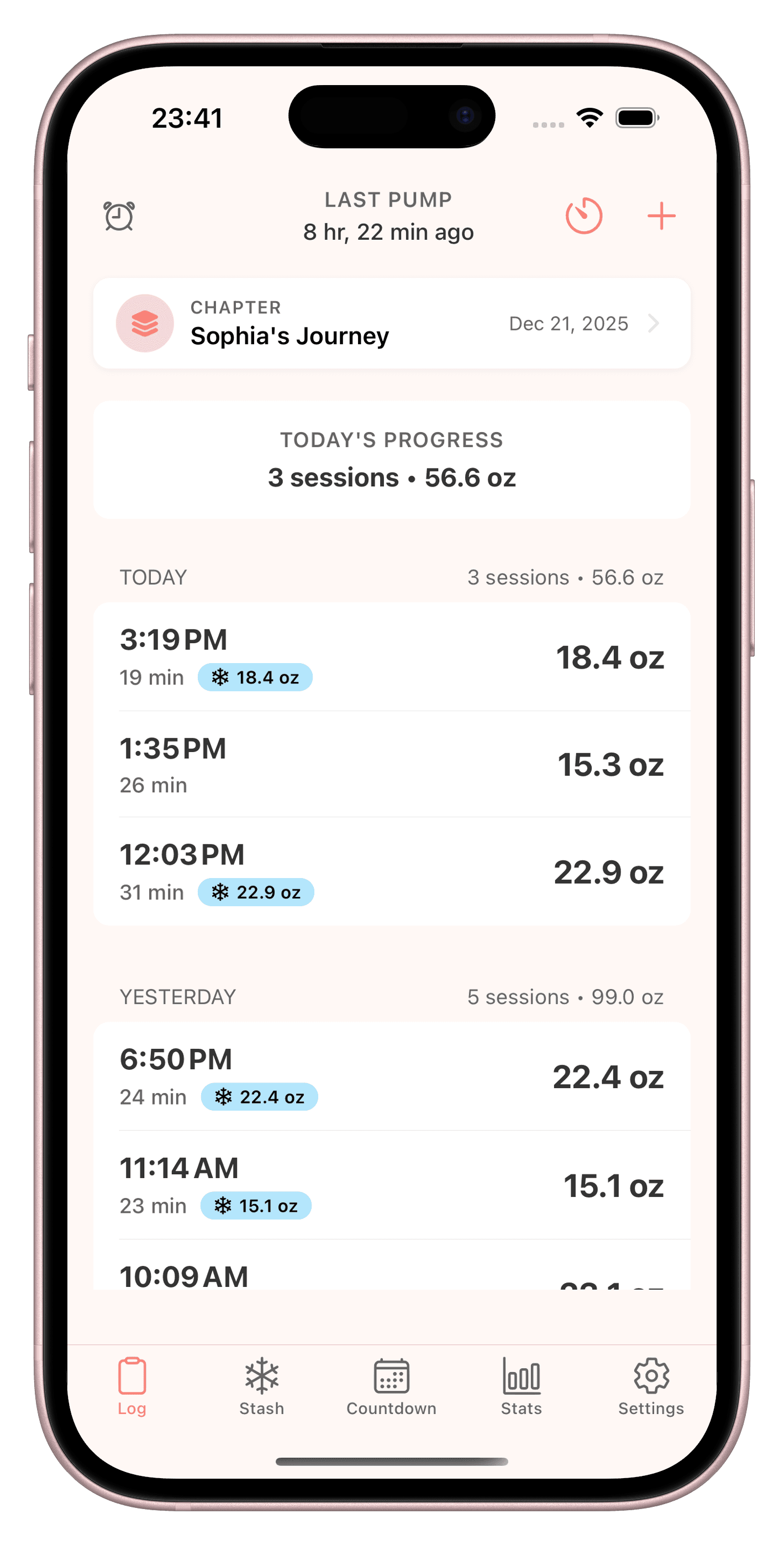
One of the most meaningful changes in the pumping experience over the past few years has been the rise of dedicated pumping tracker apps. What was once managed with a notebook and pen — or not tracked at all — can now be logged in seconds, giving parents real-time insight into their supply patterns, session trends, and storage inventory.
A good pumping tracker app removes mental load. When you're functioning on broken sleep and managing a newborn, trying to remember when you last pumped, how much you got, or how much milk is in the freezer is genuinely difficult. Having that information at a glance — on your phone — means one fewer thing to worry about. If you're on iPhone, Stash brings sessions, volumes, and stash inventory together so nothing gets lost in the shuffle.
Beyond simple logging, the best apps surface patterns you might never spot on your own. You might notice that your output is consistently highest at the 7am session, or that it dips mid-afternoon, or that you always get more on the left side — information that lets you make smarter decisions about when and how to pump. Over weeks, you can see your supply growing, which is enormously reassuring in the exhausting early weeks.
Pumping apps are also invaluable for parents returning to work. Being able to quickly check how much milk is in the fridge and freezer, and cross-reference it with how much the baby drinks per day, helps you understand exactly how many sessions you need to pump at work to keep up with demand — removing the guesswork entirely.
When choosing a pumping tracker app, look for one that offers quick-entry session logging, left/right breast tracking, milk storage inventory management, trend charts over time, and customisable reminders for upcoming sessions. The best apps also allow you to log breastfeeding sessions alongside pumping, giving you a complete picture of your baby's milk intake. Data privacy is also worth checking — look for apps that handle your personal health data with appropriate care.
Building and Managing Your Freezer Stash
Building a freezer stash of expressed breast milk is one of the most empowering things a pumping parent can do. Having a reserve of milk gives you flexibility, security, and peace of mind — knowing that even if you have a low-output day, an illness, or a period of travel, your baby can continue to receive breast milk.
The best time to start building a stash is once your supply is well established (around four to six weeks) and before you return to work, if applicable. Even adding just one extra pumping session per day — ideally in the morning when output tends to be highest — can generate 60–120ml of additional milk that can be frozen.
Aim for a modest, realistic target rather than an overwhelming one. Many lactation consultants suggest aiming for a stash of three to five days' worth of your baby's milk intake as a comfortable buffer. A rough guide: babies typically consume around 25ml per hour when feeding exclusively on breast milk, averaging 750–900ml per day. So a three-day stash would be approximately 2,250–2,700ml.
Organise your freezer stash methodically — by date, oldest at the front. Breast milk storage bags can be stored upright in a small bin or box for easy access. Some parents keep a simple inventory (or use their pumping app's stash tracking feature) to know exactly what they have without rummaging through the freezer.
Be aware that a small percentage of parents produce milk that is high in lipase — an enzyme that breaks down fat. High-lipase milk can develop a soapy or metallic smell after freezing, which some babies reject. This milk is safe to consume but unpalatable to some infants. If you suspect high lipase, try scalding freshly expressed milk (heating to approximately 72°C, just before boiling) and then cooling and freezing it immediately. Scalded milk will not smell soapy when thawed.
High lipase milk? Scald freshly expressed milk to ~72°C (just before boiling), cool immediately, then freeze. This prevents the soapy or metallic smell some babies reject when milk is thawed.
- Start building a stash from 4–6 weeks, or 2–3 weeks before returning to work
- Add one extra morning session for stash building — output is naturally highest then
- Target a 3–5 day buffer — roughly 2,250–2,700ml for a fully breastfed baby
- Store bags flat, freeze oldest milk at the front for easy rotation
- Track your stash in a pumping app for real-time inventory without freezer-diving
- High lipase milk? Scald freshly expressed milk before freezing to prevent soapy taste on thawing
Pumping and Mental Health
Pumping is physically demanding, time-consuming, and emotionally complex. It can feel like a second job — sitting attached to a machine for hours every day, watching the bottles fill (or not fill), comparing your output to online forums, and feeling the weight of responsibility for another human being's nutrition. It's important to address this reality honestly.
Many pumping parents report feelings of guilt, failure, or inadequacy when output doesn't meet their expectations, or when they compare themselves to other parents who seem to produce effortlessly. The first and most important thing to say is: fed is best. Your baby's wellbeing — and your wellbeing — matters far more than whether milk comes from the breast, the pump, or a formula tin.
If pumping is causing you significant distress, it's worth speaking openly with a midwife, health visitor, or GP. Postnatal depression and anxiety are common, and the pressure of pumping can exacerbate these conditions. There is no virtue in continuing a practice that is harming your mental health — and a baby with a calm, healthy caregiver thrives, regardless of feeding method.
That said, many parents also find pumping deeply meaningful. Seeing the milk accumulating in the bottles — knowing they are providing for their baby even when apart — can be a profound source of connection and pride. Tracking your journey, celebrating milestones (your first 100ml, your first full stash bag), and sharing experiences with a community of other pumping parents can transform a solitary, medical-feeling activity into something that feels purposeful and even joyful.
Give yourself permission to be flexible. Pumping doesn't have to be all-or-nothing. Even partial pumping — one or two sessions a day alongside formula feeding — provides your baby with valuable immune factors and saves money. Any amount of breast milk is beneficial. Your pumping journey is your own, and only you can decide what is right for your family.
Pumping aversion (D-MER) is a real, hormonal condition — not a sign you should push through. If pumping brings on sudden feelings of dread or low mood, speak to a healthcare provider familiar with dysphoric milk ejection reflex.